
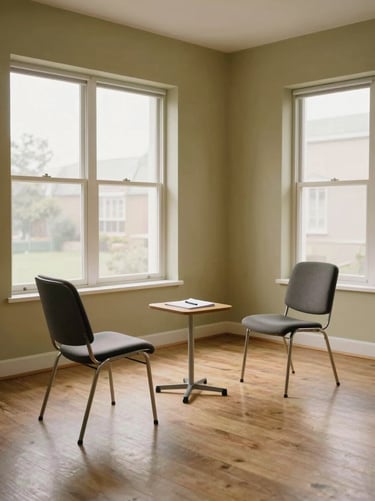

Wide environmental shot of a bright therapy room interior — natural north-facing daylight through large windows, two empty chairs angled toward each other on a plain wood floor, a small side table with a notepad and pen, muted warm-olive walls, no people present — evidential and calm
Close-up of hands resting on a plain wooden desk surface, one hand holding a pen poised over an open notebook with handwritten lines visible, warm natural window light from the left, muted linen-toned table, no faces — evidential documentary framing
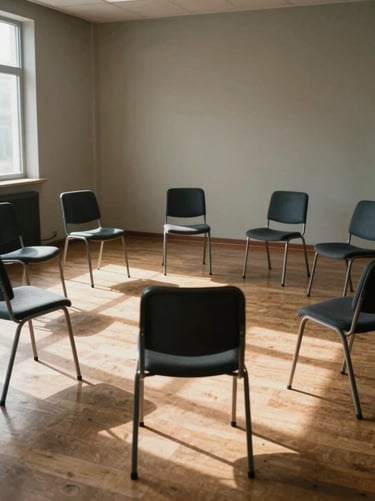
Wide environmental shot of a group therapy room in use — several chairs arranged in a circle on a wood floor, natural daylight from high windows casting long shadows, one empty chair visible in the foreground, muted earth-tone walls, no individual faces identifiable — evidential, occupied space
— Fase Psicossocial
/ Terapia Individual
Grupos Terapêuticos

O comportamento que sustenta a dependência tem padrão. Identificar esse padrão é o trabalho.

Sessões individuais com foco em gatilhos verificáveis

AA, NA e grupos clínicos como estrutura social, não substituto terapêutico

▸ Saída desta fase

Autocuidado não é atitude. São habilidades treinadas e verificáveis.

Ao final desta fase, o paciente consegue nomear seus gatilhos de uso, identificar os estados emocionais que os precedem e aplicar estratégias de resposta que foram praticadas — não apenas discutidas — durante o internamento.

Essas habilidades são o elo entre a estabilização clínica e a reintegração social que vem a seguir.